At a glance
| Area | VMBook | Microsoft Hyper-V |
|---|---|---|
| Price | Free to use | Depends on the product and edition |
| Main scope | Desktop to remote multi-site fleet | Windows virtualization |
| Machine engines | QEMU plus platform providers | Its own supported platform |
| Command visibility | Shows the QEMU command before it runs | Platform-dependent |
| Image work | Convert, compact, check, repair, resize, snapshot | Platform-dependent |
| Remote API | TLS 1.3, pinned certificate and token | Platform-dependent |
Migration and coexistence
Start, stop, save, checkpoint, clone, create and inspect Hyper-V machines through Windows PowerShell; an off machine can be converted into a VMBook machine.
Where VMBook is different
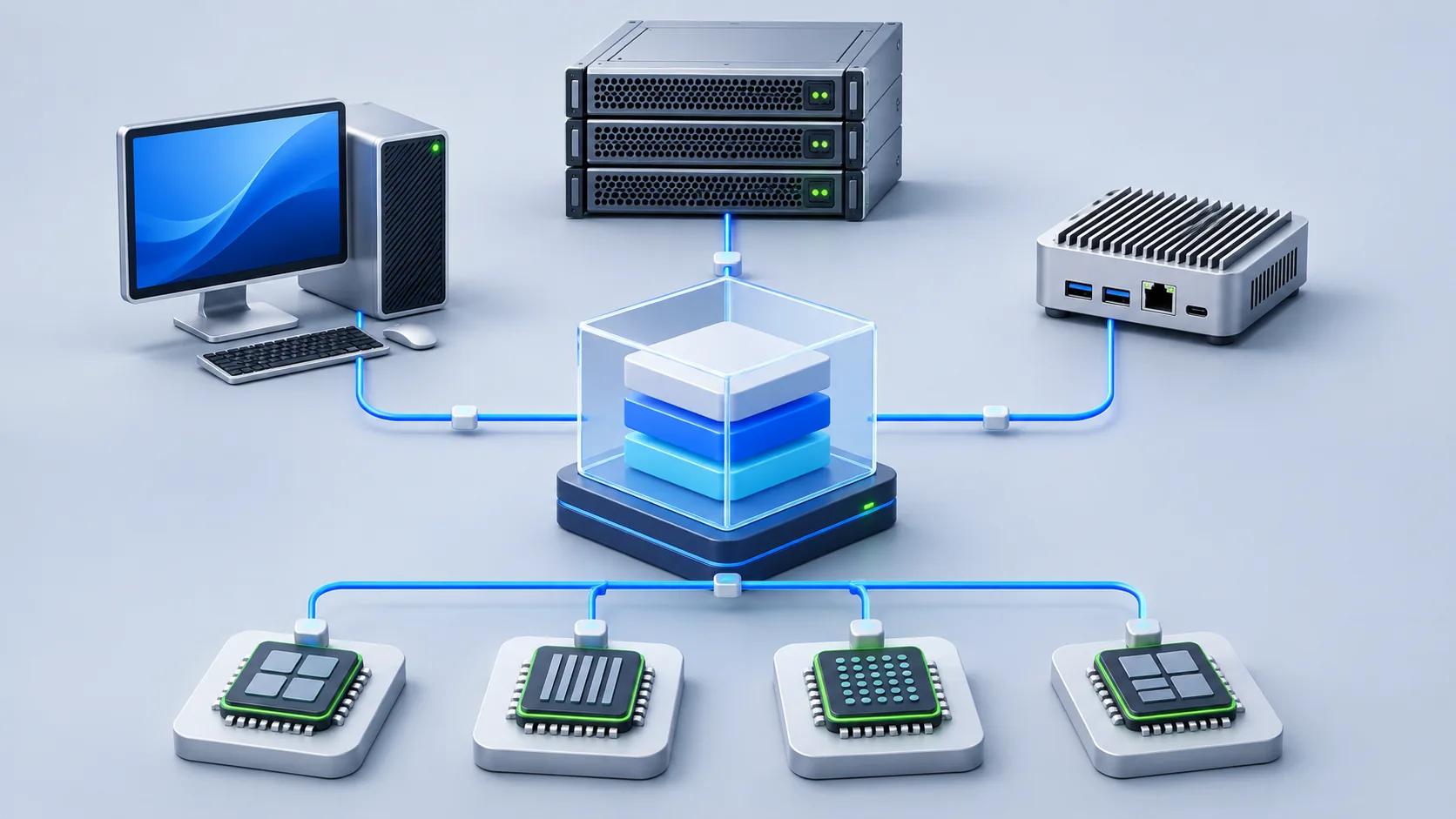
VMBook is trying to remove the line between a friendly desktop manager and a data-center console. A machine stays understandable on one laptop, then appears under a host and site when the same organization grows. Hyper‑V, WSL, libvirt, UTM, Proxmox and ESXi objects can remain owned by their native platforms instead of being hidden or forcibly converted.
Where Microsoft Hyper-V may still be the better fit
VMBook is version 0.1. Choose the established platform when you require a production feature that VMBook has not yet tested or completed—especially mature high availability, live migration, vendor support contracts or a platform-specific integration.
Frequently asked questions
Is VMBook free?
Yes. VMBook may be used on any number of computers for personal, educational and commercial purposes.
Can VMBook replace Microsoft Hyper-V?
It depends on the work. VMBook 0.1 already covers substantial machine and image management, but mature platform-specific cluster, HA or integration features may still belong to Microsoft Hyper-V.
Does VMBook bundle QEMU?
No. VMBook locates and runs the QEMU installed on the host.