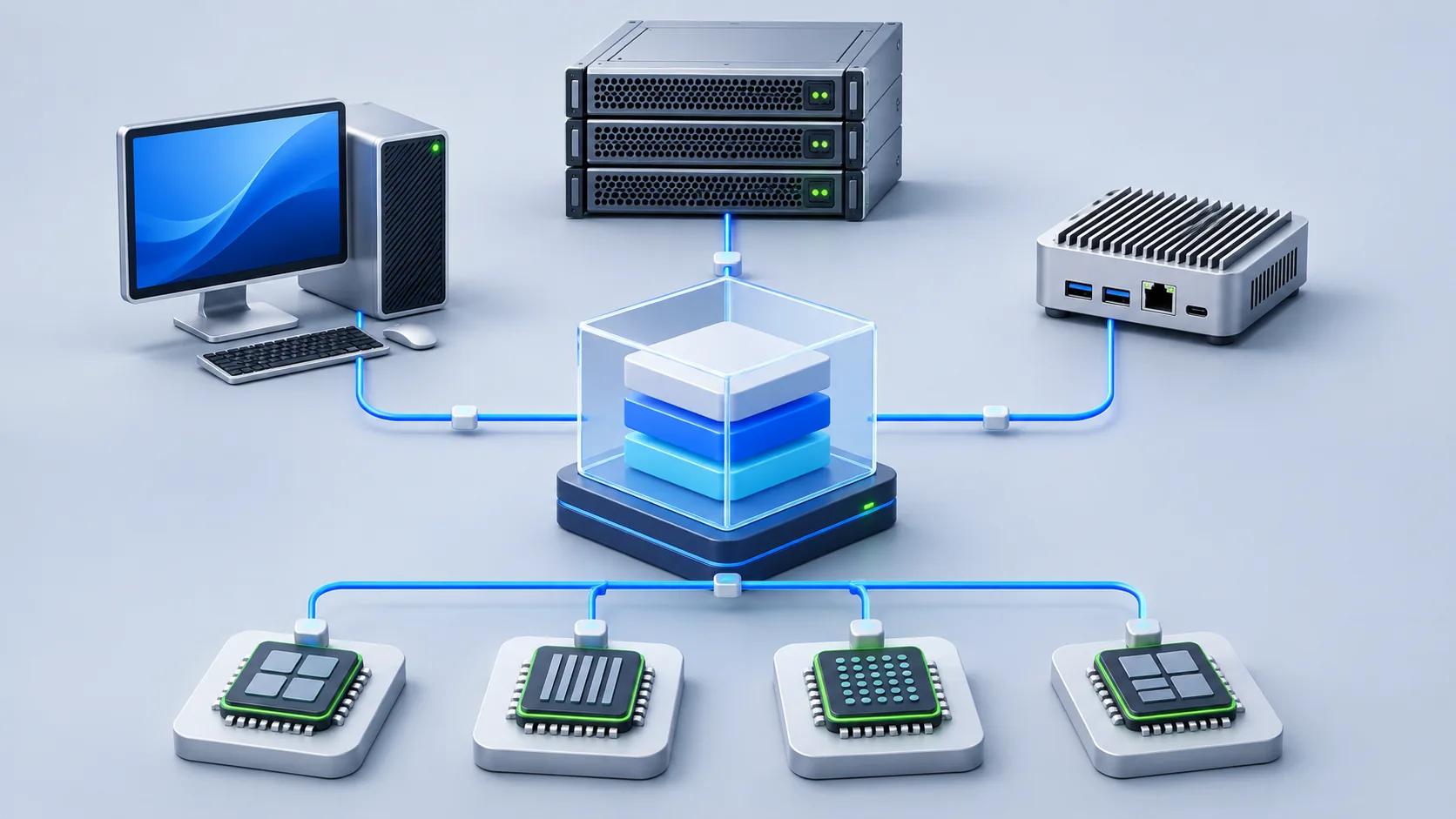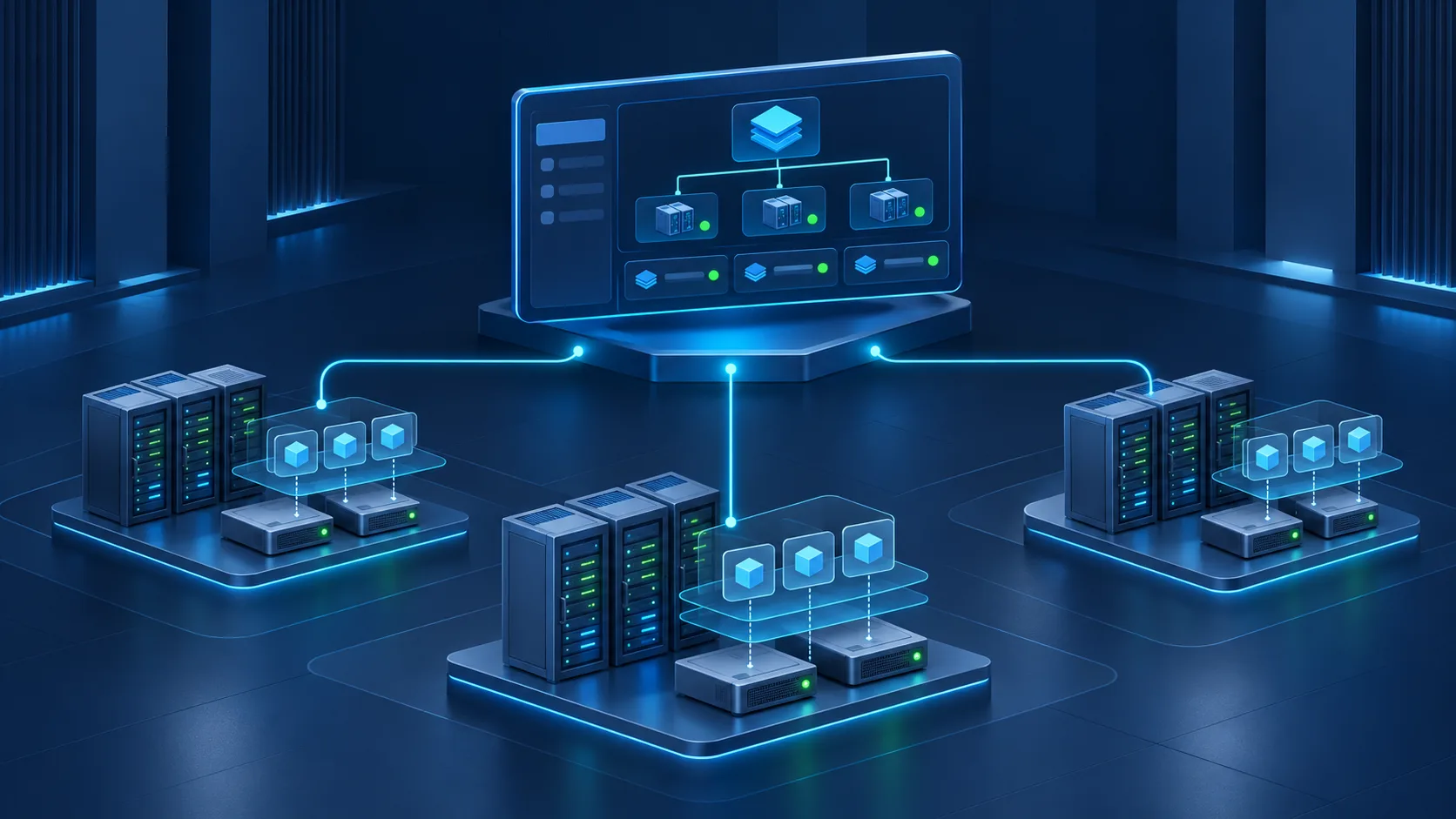
What VMBook manages
Native VMBook machines run through QEMU. On Windows, Hyper‑V machines and WSL distributions remain owned by Windows but appear in the same book. On Linux, libvirt machines remain libvirt’s. On macOS, UTM and Apple Virtualization machines can be represented by their own providers.
Machines and images
A machine has a permanent identity and its own machine.json. Its disks are a list, not its identity. Images remain independently manageable: inspect, convert, compact, repair, resize, snapshot and clone them.
Architectures
The QEMU composer supports x86‑64, ARM64, RISC‑V 64 and POWER, selecting suitable boards, firmware and devices. Actual tested combinations are listed on What runs.
Remote hosts, sites and data centers
Each VMBook service exposes a certificate-pinned HTTPS interface. Trusted computers can be placed under named sites, including offices and data centers, then viewed and controlled as a fleet. A remote may itself reach another remote, supporting routed and multi-center layouts.
HTTPS API
The service listens on port 3333 by default, requires a bearer token, uses TLS 1.3 and advertises itself with mDNS when enabled. It lists machines, host usage, images, providers, remote computers, fleet sites and jobs; machine power and settings use the same backend as the desktop window.
GET /v1/host
GET /v1/machines
POST /v1/machines/{id}/start
GET /v1/fleet
PUT /v1/fleet/{id}/site
Where the design is going
The product is deliberately shaped toward a tree of site → computer → platform → machine, with live networks and storage alongside it. Redfish BMC sensor and power integration belongs to that ESXi-class direction; it should be treated as roadmap work until the implementation is complete.