
What this means in VMBook
VMBook ready-made systems use this idea to create machines quickly and save disk space. The product keeps a machine’s identity separate from its disk files, so storage can move and machines can grow to several disks without losing their place in the fleet.
Every native QEMU action remains inspectable. VMBook composes the command from the machine’s settings, shows it before execution and keeps the long tail available to people who already know QEMU. A friendly interface and an expert interface are two views of the same operation.
Designed for a wider estate
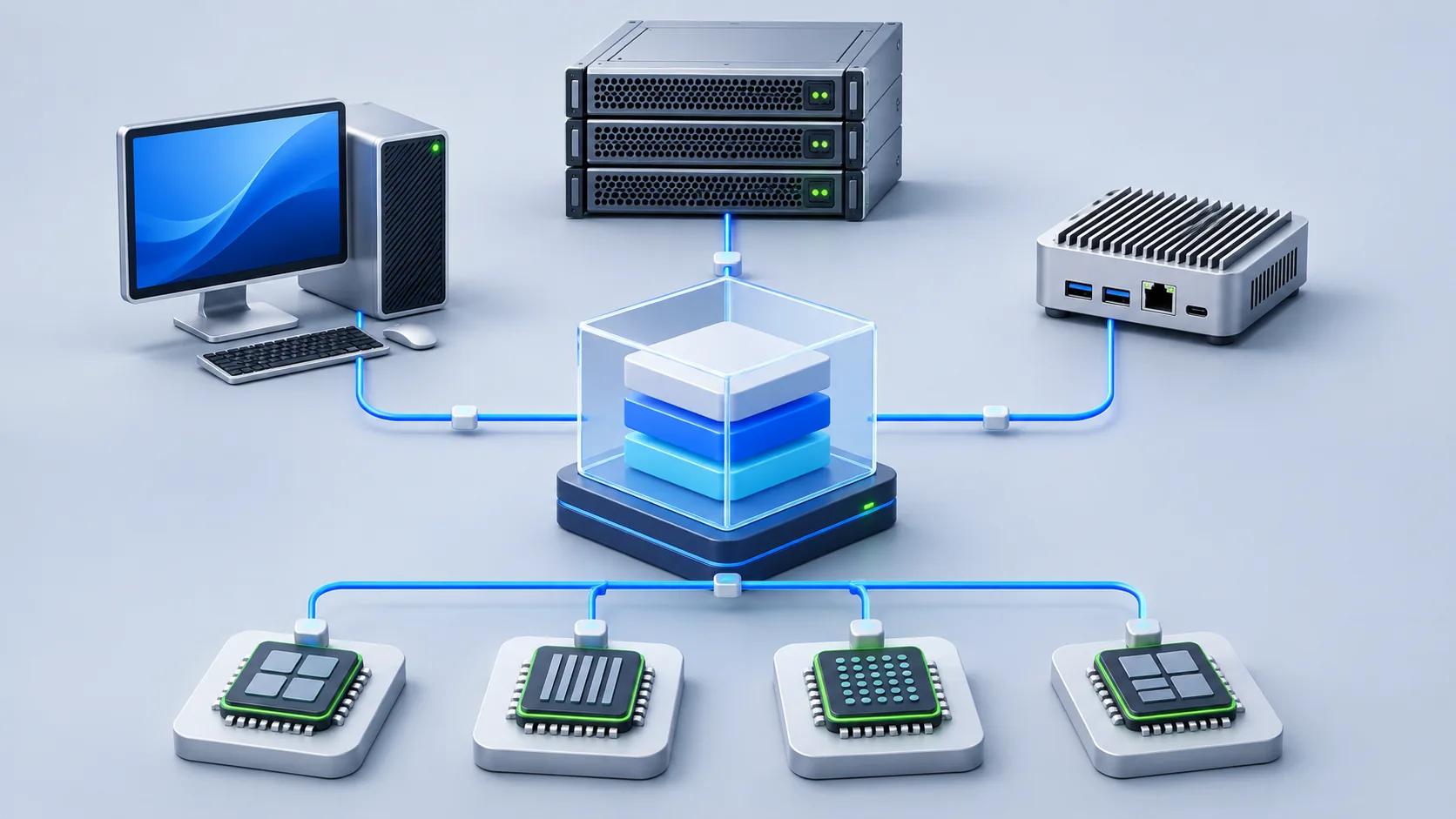
VMBook starts on one computer but its backend is also a headless service. Trusted computers connect over TLS 1.3, pin one another’s certificates and can be grouped under offices or data centers. Each host remains responsible for composing and running its own machine command.

Compatibility is evidence, not a promise
Defaults and warnings come from combinations that have actually run. The compatibility record covers Windows and Debian hosts, several processor architectures and imported machines from common desktop platforms. An unlisted combination is treated as unverified rather than advertised from theory.
Current status
VMBook is version 0.1. Windows 11 is the first fully tried desktop host, while Linux server operation and provider integrations are actively represented in the build. Pages on this site distinguish completed behavior from design direction so early users can evaluate it honestly.