
Why VMBook exists
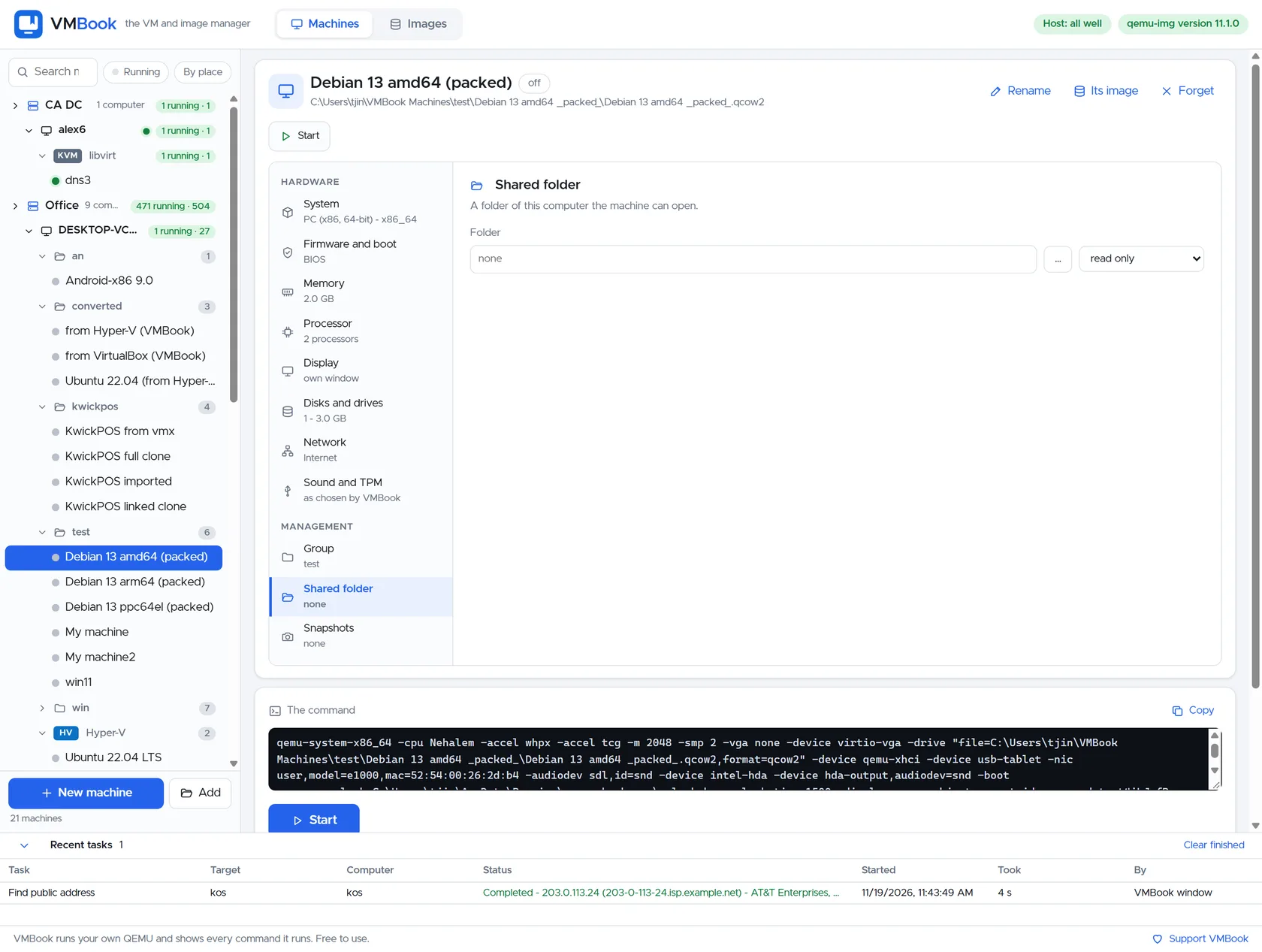
QEMU is powerful, portable and capable of emulating more than one processor family, but its command surface is large. VMBook turns intent into a visible command while keeping machines and disk images understandable.
One desk to many computers
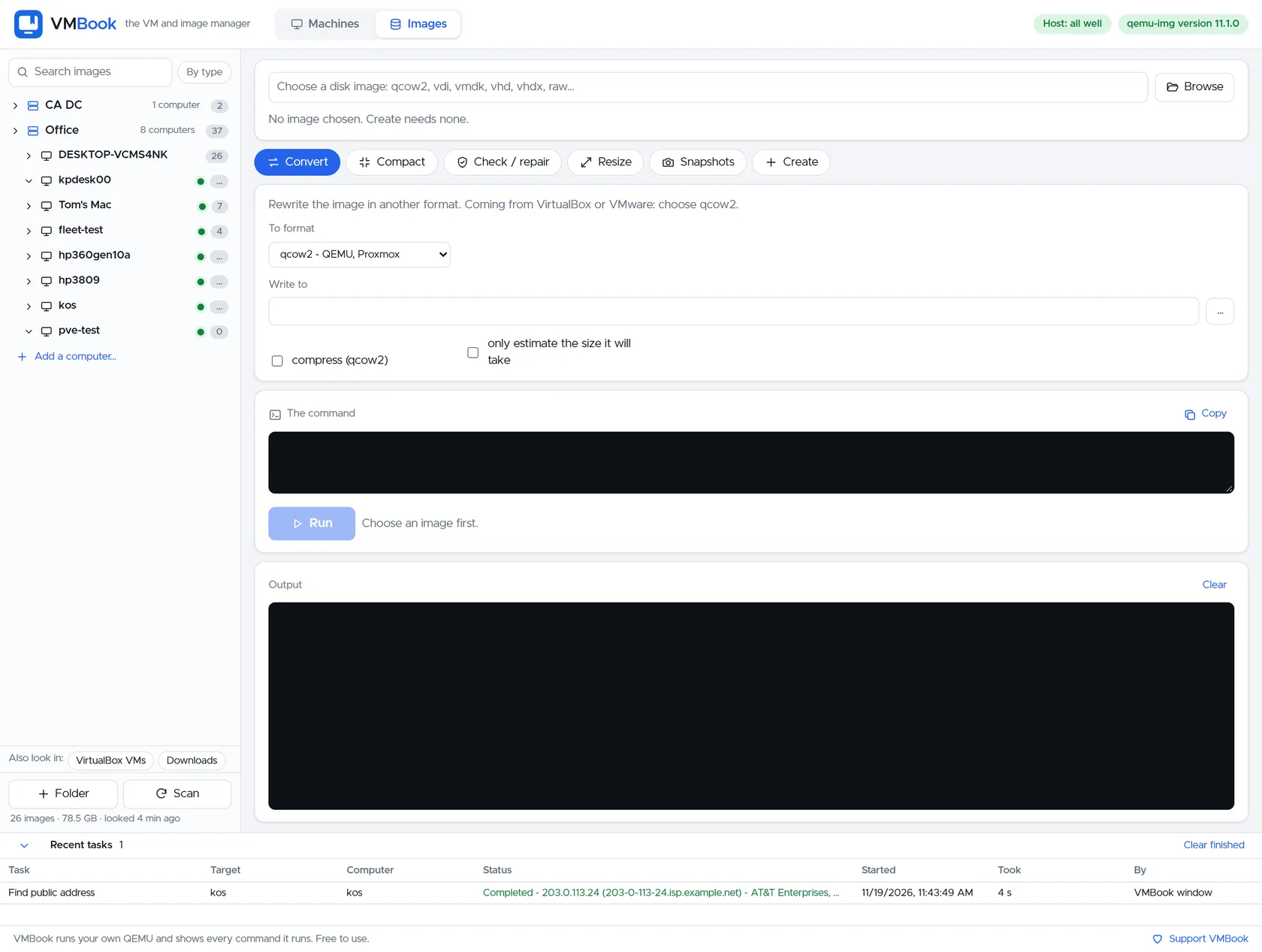
The same core serves a desktop window, headless Linux service, browser console and versioned HTTPS API. VMBook also presents supported machines owned by Hyper-V, WSL and libvirt without pretending to own their definitions.
Free to use, not open source
VMBook may be installed on any number of computers for personal, educational and commercial purposes under its license. Its own source is not published. Third-party components retain their own licenses, and QEMU is a separate program.
Author
VMBook is created by Tom Jin in Harris County, Texas. The product is built around observable commands, local control, no hidden telemetry and evidence from real runs.