
Security model
VMBook exposes defined machine, image and host operations. Its API does not accept an arbitrary shell or QEMU command from a remote caller. The host composes commands from stored settings.
Remote trust
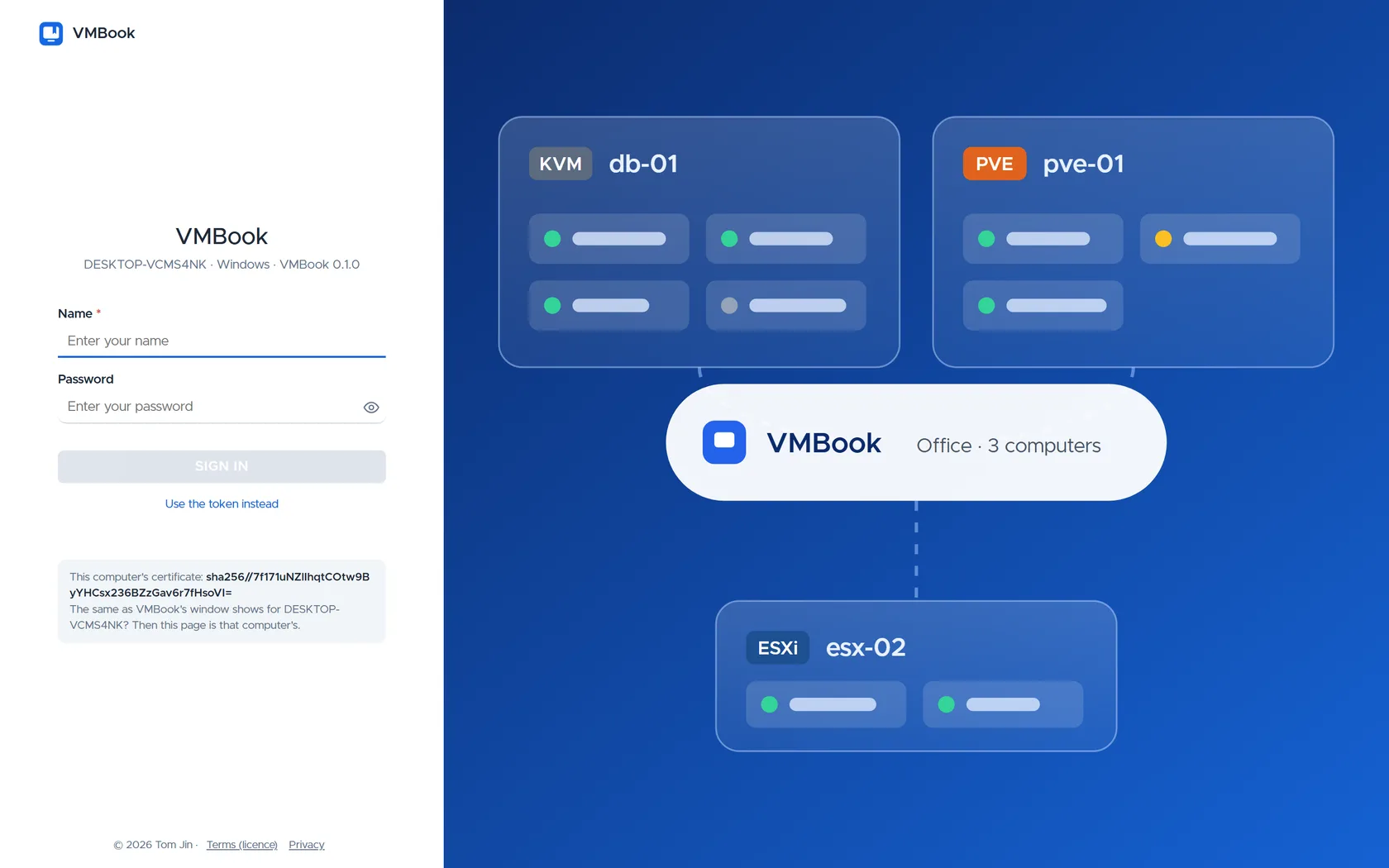
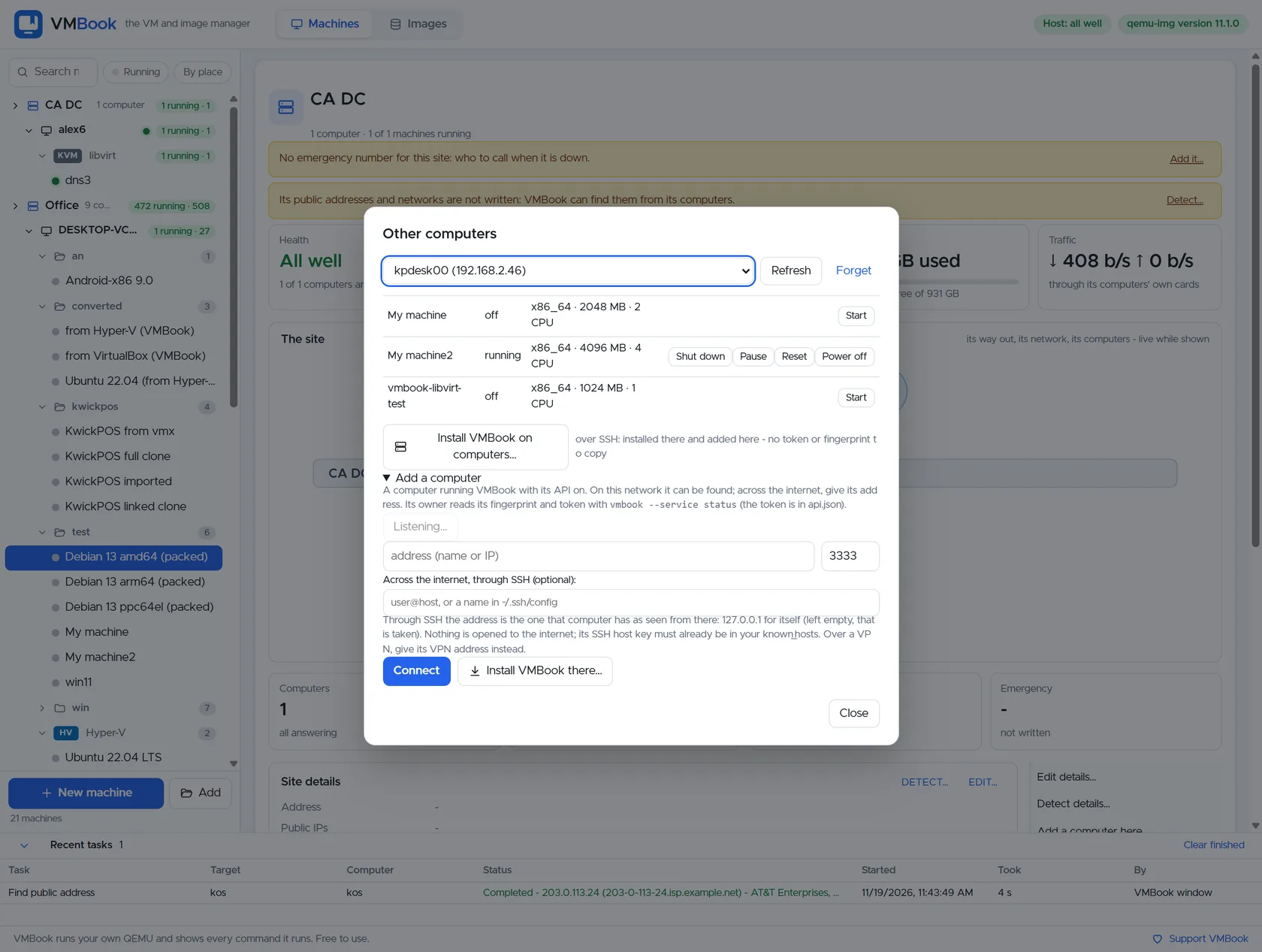
The API uses TLS 1.3 and a bearer token. Each computer has its own certificate; callers must verify and pin its SHA-256 public-key fingerprint before sending the token. mDNS discovery is only a hint and never proof of identity.
- Protect the settings folder as administrative data
- Place VM and BMC management on protected networks
- Rotate a token if it may have entered a URL, log or prompt
- Treat a remote-routing token as transitively powerful
Signed updates
VMBook verifies release manifests with an embedded Ed25519 public key. Isolated environments may provide signed updates through a controlled local folder.
Report a vulnerability
Send a private report to [email protected] with “Security” in the subject. Include affected version, impact, reproduction steps and a safe contact method. Do not publish working exploitation details before coordinated review.
Current limitation
The current computer token is broad: it controls machines available to that service user. Scoped agent credentials, finer resource permissions and richer audit controls are required before exposing AI or automation broadly.